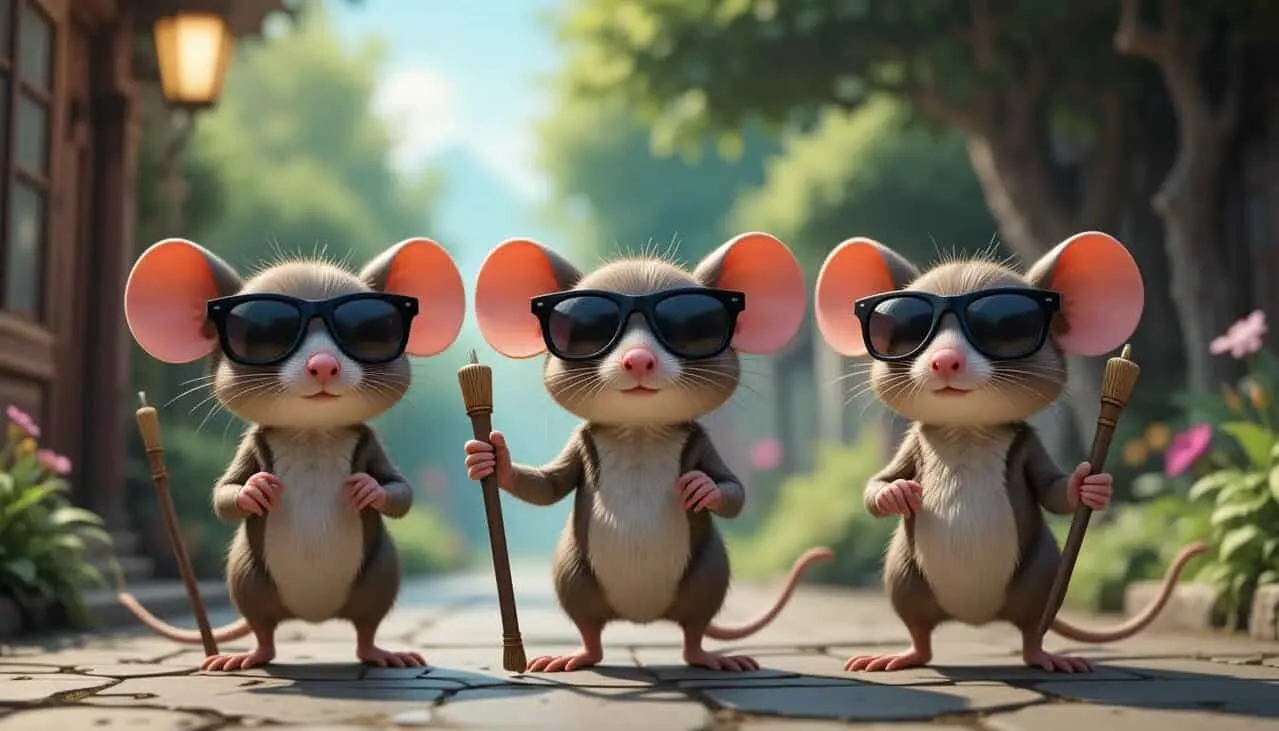
The nursery rhyme Three Blind Mice is one of the most recognizable and enduring children’s songs. With its catchy melody and seemingly simple lyrics, it has captivated audiences for centuries. However, beneath its innocent facade lies a complex history and multiple interpretations that have contributed to its enduring popularity.
This article delves into the origins, historical context, and cultural impact of “Three Blind Mice,” exploring why it remains a beloved and versatile tale.
Origins and Historical Context
The earliest known publication of “Three Blind Mice” dates back to 1609 in Deuteromelia or The Seconde part of Musicks melodie, edited by Thomas Ravenscroft.
The original lyrics were quite different from the modern version:
"Three Blinde Mice,
Three Blinde Mice,
Dame Iulian,
Dame Iulian,
the Miller and his merry olde Wife,
shee scrapte her tripe licke thou the knife."
These early lyrics suggest a more complex narrative than the simplified version we know today. The rhyme gained widespread recognition when it was included in James Orchard Halliwell’s collection The Nursery Rhymes of England in 1842. Halliwell’s publication helped standardize the rhyme, making it accessible to a broader audience.
Modern Version
For comparison, we’ve included the modern version of three blind mice:
Three blind mice, three blind mice,
See how they run, see how they run!
They all ran after the farmer's wife,
Who cut off their tails with a carving knife,
Did you ever see such a sight in your life,
As three blind mice?
Historical Interpretations
One of the most popular theories about the rhyme’s origins is its connection to Queen Mary I of England, also known as “Bloody Mary,” who was notorious for her persecution of Protestants. According to this theory, the “three blind mice” are often interpreted as Protestant loyalists, symbolizing their “blindness” to Catholicism. This interpretation suggests that the rhyme was a form of subtle protest against the religious persecution of the time.
However, this theory is speculative, and the original lyrics do not support this interpretation directly. Other theories propose that the rhyme could refer to the persecution of Catholics by Protestants or even to a specific historical event involving three blind men. Despite these varying interpretations, the true origins and meaning of “Three Blind Mice” remain unclear, adding to its mystique and enduring appeal.
Cultural Impact and Adaptations
“Three Blind Mice” has been adapted and reinterpreted in various forms of media, reflecting its versatility and cultural significance:
- Shrek Franchise: The Three Blind Mice characters in the Shrek films are a comedic reinterpretation of the nursery rhyme, contributing to the franchise’s satirical humor and intertextual dialogue with classic narratives. These characters, with their witty banter and comedic antics, have become beloved by audiences worldwide.
- Horror Movie Adaptation: A recent horror movie, Three Blind Mice, transforms the mice into blind mutant killers, offering a dark and modern twist on the classic tale. This adaptation showcases how the rhyme can be reimagined to fit different genres and themes, appealing to diverse audiences.
- Educational Value: The rhyme remains a staple in music education due to its simple melody and repetitive structure, making it ideal for teaching children about rhythm and melody. Its catchy tune and easy-to-remember lyrics have helped generations of children develop their musical skills and appreciation for nursery rhymes.
The rhyme’s versatility and adaptability have allowed it to transcend its origins, becoming a part of our shared cultural heritage. As we continue to reinterpret and re-imagine “Three Blind Mice,” we not only preserve its legacy but also ensure its relevance for future generations.
We hope you enjoyed this article, we have more articles about popular rhymes such as Mary had a little lamb.